Current ExhibitionHomeland – Yehuda Armoni, Curator Dr. Doron J Lurie

Apr 23, 2026May 23, 2026
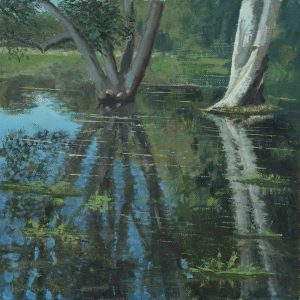
  • Winter pond in Natanya  | oil on canvas
    Winter pond in Natanya | oil on canvas

    40X40 cm, 2024

  • Monfort view from Goren Park | oil on canvas
    Monfort view from Goren Park | oil on canvas

    80X150 cm, 2025

  • Capriccio | oil on canvas
    Capriccio | oil on canvas

    80X150 cm, 2025

  • Amazia caves | oil on canvas
    Amazia caves | oil on canvas

    80X100 cm, 2024

  • Deserted quarry in Lachish 2025 | oil on canvas
    Deserted quarry in Lachish 2025 | oil on canvas

    100X100 cm, 2025

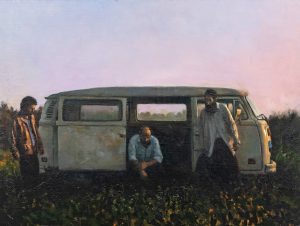
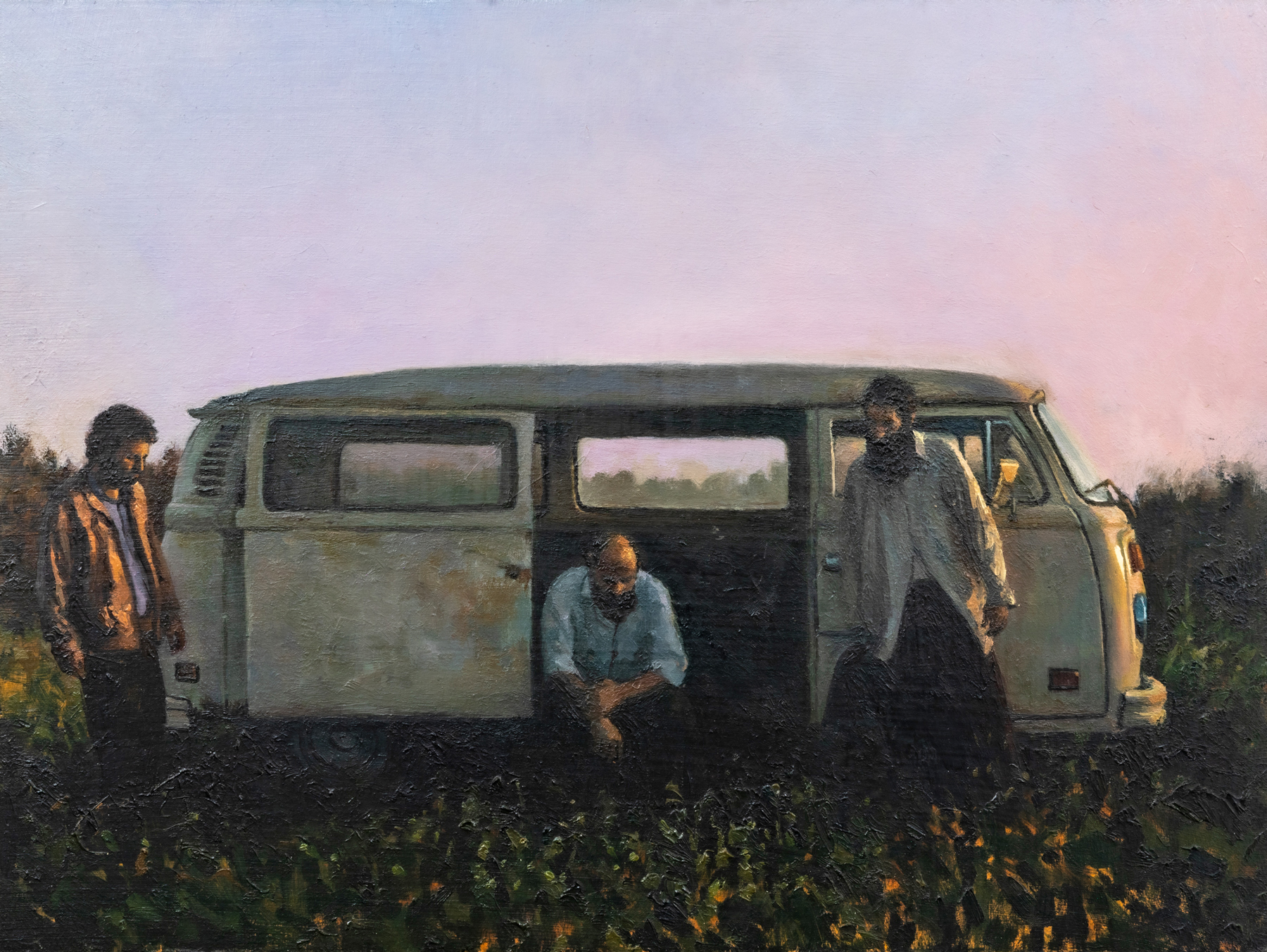
  • A blue wagon in Ben Shemen Forest  | oil on wood
    A blue wagon in Ben Shemen Forest | oil on wood

    30X40 cm, 2025

  • A lion in Ben Shemen Forest  | oil on canvas
    A lion in Ben Shemen Forest | oil on canvas

    40X50, 2025

  • Sheep and pond in Ben Shemen Forest | oil on canvas
    Sheep and pond in Ben Shemen Forest | oil on canvas

    40X40 cm, 2025

  • Latrun Monastery  | oil on canvas
    Latrun Monastery | oil on canvas

    60X80 cm, 2022

  • Monastery of the cross and The Israel Museum  | oil on canvas
    Monastery of the cross and The Israel Museum | oil on canvas

    50X70 cm, 2025

  • Winding tree in Reut  | oil on canvas
    Winding tree in Reut | oil on canvas

    50X70 cm, 2024

  • Trees in The Malachim Forest, oil on canvas, 80X60 cm, 2025

  • The Monfort view from the south  | oil on canvas
    The Monfort view from the south | oil on canvas

    30X40 cm, 2025

  • A tangle in Canada Park  | oil on canvas
    A tangle in Canada Park | oil on canvas

    30X40 cm, 2021

  • A plantation in the Malachim Forest | oil on wood
    A plantation in the Malachim Forest | oil on wood

    30X60 cm, 2025

  • Almond trees in Titora  | oil on canvas
    Almond trees in Titora | oil on canvas

    50X70 cm, 2025

  • Cypress hill  | oil on canvas
    Cypress hill | oil on canvas

    35X40 cm, 2025

  • Winer pond in Natanya 2024 | oil on wood
    Winter pond in Natanya 2024 | oil on wood

    20X20 cm, 2024

  • Winter lake in Nitzanim  | oil on canvas
    Winter lake in Nitzanim | oil on canvas

    32X38 cm, 2025

  • Shishkin in Lachish stream | oil on canvas
    Shishkin in Lachish stream | oil on canvas

    40X40 cm, 2025

  • Deserted quarry in Lachish | oil on wood
    Deserted quarry in Lachish | oil on wood

    20X20 cm, 2025

  • A dirt road in Ben Shemen Forest  | oil on wood
    A dirt road in Ben Shemen Forest | oil on wood

    20X20 cm, 2023

  • A dirt road in Menashe Forest  | oil on wood
    A dirt road in Menashe Forest | oil on wood

    20X20 cm, 2023

  • A dirt road in Reut  | oil on wood,
    A dirt road in Reut | oil on wood,

    20X20 cm, 2024

  • A rock in Cnobbe  | oil on wood
    A rock in Cnobbe | oil on wood

    20X20 cm, 2022

  • A pond and dr roads in Ben Shemen | oil on wooden block
    A pond and dr roads in Ben Shemen | oil on wooden block

    14X62 cm, 2025

  • A tangle in Ramot Menashe  | oil on canvas
    A tangle in Ramot Menashe | oil on canvas

    20X40 cm, 2025

  • Ben Shemen Forest and rocks , oil on canvas, 40X40 cm, 2025

  • Almond trees in Titora hill | with dark backround, oil on canvas
    Almond trees in Titora hill | with dark backround, oil on canvas

    40X40 cm, 2025

  • Almond trees in Titora hill  | oil on canvas
    Almond trees in Titora hill | oil on canvas

    20X20 cm, 2025

  • A winter pond in Ben Shemen Forest  | oil on canvas
    A winter pond in Ben Shemen Forest | oil on canvas

    70X100 cm, 2025

  • A vineyard in front of Hirbet Jadie oil on wood
    A vineyard in front of Hirbet Jadie oil on wood

    20X20 cm, 2024

  • A trunk in Lachish stream  | oil on canvas
    A trunk in Lachish stream | oil on canvas

    30X40 cm, 2025

  • A trunk from Lachish in Ben Shemen  | oil on canvas
    A trunk from Lachish in Ben Shemen | oil on canvas

    30X40 cm, 2025

  • Cypress Hill from Maccabim ,oil on canvas
    Cypress Hill from Maccabim ,oil on canvas

    35X40 cm, 2025

  • Cypress hill with green ,oil on wood
    Cypress hill with green ,oil on wood

    20X20 cm, 2022

  • Cypress hill with yellow  | oil on wood
    Cypress hill with yellow | oil on wood

    20X20 cm, 2023

  • Dragot Cleefs , oil on canvas, 30X40 cm, 2019

  • The seam line above Shilat  | oil on wood
    The seam line above Shilat | oil on wood

    20X20 cm, 2023

  • Palm trees in Reut  | oil on wood
    Palm trees in Reut | oil on wood

    20X20 cm, 2023

  • Nesher Factory view from Ben Shemen  | oil on canvas
    Nesher Factory view from Ben Shemen | oil on canvas

    20X20 cm, 2022

  • Trees near Ramat Yishay  | oil on wood
    Trees near Ramat Yishay | oil on wood

    20X20 cm, 2023

  • Last days of a vineyard in Lachish  | oil on wood
    Last days of a vineyard in Lachish | oil on wood

    20X20 cm, 2023

  • Atlit beachoil on canvas
    Atlit beachoil on canvas

    30X40 cm, 2025

About Exhibition
×

Yehuda Armoni – Homeland

Curator: Dr. Doron J. Lurie

“Man is nothing but the landscape of his homeland,” wrote the poet Shaul Tchernichowsky, reflecting on the deep bond between a person’s character and the landscapes of childhood and early experience. It is a pity that when the Russian-born poet wrote these beautiful words, he had in mind the plains of Crimea – the scents, the endless expanses, the rushing rivers, the church spires – and not the Land of Israel. On the contrary: when describing his first impressions of the Holy Land, where he spent the last twelve years of his life, he wrote with disappointment: “Oh my land, my homeland! A bare, rocky mountain…”

Despite this bitter sentiment, it is possible that Yehuda Armoni’s landscapes of Israel might have stirred even in Tchernichowsky a warm sense of home. I am thinking especially of Armoni’s paintings of the monastery at Latrun – Our Lady of the Seven Sorrows, better known locally as the Monastery of the Silent Monks. After all, it is a fact that the poet met his death at Jerusalem’s San Simon Monastery, and only to avoid a national scandal was his body hastily transferred to Hadassah Hospital. Irony of fate: exactly ten years later, in 1953, Yehuda Armoni was born at Misgav Ladach Hospital, just 150 meters from that very monastery.

Indeed, as Tchernichowsky suggested, Yehuda Armoni is deeply connected to his homeland – Israel. This is evident not only in his long military service (approximately 25 years), but also in his landscapes of the country, and even in his family roots. He is a descendant of the Castel family (Castel → Palace → Armon (in Hebrew) → Armoni), who immigrated to the Land of Israel more than 500 years ago, following the Expulsion from Spain.

Let us return to the paintings. Yehuda Armoni specializes in landscapes. Some argue that there are landscapes more sublime for painting than those with which our country has been endowed: the groves of Tuscany and Umbria dotted with medieval towns, the Grand Canyon, Niagara Falls, the fjords of Norway, the eternal glaciers of Antarctica, the stalactite and stalagmite caves of Belgium, and so on. And yet, for many of us, there is nothing like our small country – better known as the Holy Land: The Sea of Galilee, the Dead Sea, Masada, the craters of the Negev (The Makhteshim), Solomon’s Pillars, and more.

Armoni, however, finds interest not only in majestic, biblical landscapes, but in the most banal fragments of scenery, in what Dr. Smadar Sheffi aptly termed the “trivial landscape”: Ben Shemen Forest, Latrun, Canada Park, the Ayalon Valley, and the Lachish region. And just as we cannot fully explain why the Dutch painter Johannes Vermeer chose to stand facing a kitchen maid for six months, painting her as she pours milk into a bowl, so it is difficult to pinpoint what drives Armoni to paint, again and again, the same plastic-wrapped grapevines. Only the gods of the Muses know.

On the History of Landscape Painting

Landscape painting is one of the most familiar genres in art, alongside still life, portraiture, genre scenes, and history painting. In its early days, landscape was considered inferior to the other genres. In the Italian Renaissance, for example, landscape rarely served as the subject itself; it appeared mainly as a backdrop to works such as Madonna and Child. In contrast, Flemish painters like Bruegel had already devoted entire paintings to landscapes. Yet even these panoramic works still included human figures and were not “pure” landscapes.

Another significant chapter in the genealogy of landscape painting is the Golden Age of Dutch art in the 17th century. During this period, specialization became widespread. As a result, landscape painting as a general category was considered too broad and diffuse. Artists believed it was better to focus on one narrow subject and depict it exceptionally well, rather than attempt everything with mediocre results. Thus, great painters emerged who specialized in landscapes with cows in a meadow (Paulus Potter), moonlight scenes (Aert van der Neer), forests with a fallen tree by a waterfall (Jacob van Ruisdael), snowy winter landscapes (Hendrick Avercamp), urban landscapes with churches (Pieter Saenredam), seascapes (Jan Porcellis), and more. Similarly, one can distinguish between painters who favored calm, still landscapes and those drawn to dramatic, turbulent, even threatening scenery.

Painting Outdoors

Here I would like to comment on the many hardships involved in painting outdoors: sudden rain, wind (which can send the canvas flying), heat waves, and the like. A particularly extreme example belongs to Vincent van Gogh. In 2017, a conservator at the Nelson-Atkins Museum, which houses his oil painting Olive Orchard (1889), discovered a grasshopper embedded in the paint—apparently trapped there while the paint was still wet and unable to escape. Indeed, already in 1885, Van Gogh described in a letter to his brother Theo his frustration with painting in nature: “When I sit outside and try to paint, suddenly a hundred flies come along, not to mention the sand and the dust.”

Yehuda is happy to join Van Gogh’s club, though he says that what mainly attacks him while painting outdoors are swarms of gnats. Landscape painting, it turns out, is not only about standing before the open space, but also about stubbornly contending with whatever lives and moves within it.

When a Landscape Wants to Sing

The scholar Dr. Mimi Haskin has compared Armoni’s paintings to poetry (Wisława Szymborska, Leah Goldberg, Tal Nitzan, Nathan Zach, Nathan Alterman). To my mind, they are no less akin to familiar songs we can hum without knowing when we learned them. Perhaps this is why, when facing the vegetation and blossoms in his paintings, what comes to mind is not a text but a melody.

As I look at the paintings, three songs play within me: “The Ever Green Mountain”(lyrics by Yoram Taharlev, music by Moni Amarilio), “Once there were Greenfields” (performed by the American group The Brothers Four), and Georges Brassens’s wonderful song Au bois de mon Coeur”, better known to Israeli audiences in Ehud Manor’s translation and Corinne Allal’s rendition as “Somewhere in the Heart, a Flower Blooms.”


Capriccio: A Landscape That Never Was

One of the two largest paintings in this exhibition is titled Capriccio. It is no accident that the term evokes the word caprice. In painting, it refers to the depiction of a place that is entirely realistic and often recognizable, yet at the same time lacks any concrete anchor in reality. In other words, the place does not exist; it is created through a creative assembly of real elements – a connection of things not actually connected, but that could have been. Such an attempt requires great daring; some might say even hubris: an effort to improve upon the works of the Creator. Yet this phenomenon is well documented in art history.

In 17th-century Holland, painters such as Hercules Seghers and Jan van Goyen excelled in this genre. Seghers, in his “fantastic landscapes,” diverted rivers from their natural courses or added church spires where none existed, all in the service of a more compelling image. In the 18th century, three Italian painters – Canaletto, Francesco Guardi, and Giovanni Paolo Panini – also contributed significantly to the genre. The first two worked in Venice, while Panini was active mainly in Rome. Panini favored ruins and ancient buildings, creating paintings in which the Colosseum, the Arch of Constantine, Trajan’s Column, and the Pyramid (located at the opposite end of Rome) appeared together in a single scene.

The capriccio genre was particularly beloved by young English aristocrats on the Grand Tour, their educational journey to the cradle of classical cultures. Instead of purchasing a separate souvenir painting from each site, Panini would compose a single beautiful image, meticulously observing the laws of perspective and detail, containing everything they wished to take back to England.

Returning to Yehuda Armoni: until now, he has sought to depict with great fidelity and inner integrity exactly what his eyes saw in nature. But in his impressive panoramic Capriccio, he departs from this practice. At first glance, we seem to see the northern Arava, the mountains of Edom and Moab, the Dead Sea, and some ancient cliff reminiscent of Masada. In reality, Armoni borrows elements from different locations – primarily Timna Park and the Ramon Crater (Makhtesh) – and assembles them into a new landscape that does not exist in reality, in a kind of act of creation.

On Process, Technique, and Image

Much has already been written (especially by Dr. David Graves) about Armoni’s use of the sfumato technique (atmospheric perspective) formulated by Leonardo da Vinci. This is a method for depicting air and haze, which grow denser as objects recede into the distance. Dr. Graves has also analyzed the light, the painterly patches, and the color in Armoni’s work, and has emphasized the importance of the small paintings made outdoors on site.

By way of comparison, the painting Quarry in Lachish, shown for the first time in this exhibition, was created through a three-stage process: first, a quick but small painting (20 × 20 cm) made in nature; then a medium-sized version (40 × 40 cm); and finally, a studio version measuring 100 × 100 cm. When I look at this painting, I am reminded of the French philosopher Alexis de Tocqueville, who wrote in 1833: “The idea of destruction [referring to the felling of America’s forests with axes] is what gives the landscape its touching grace.” Regrettably, what is distinctive about Armoni’s painting is that the quarried area, painted in a glaring white, appears as a painful wound in the landscape, entirely devoid of any “touching grace.”

Stone Lions (The Lion Sleeps Tonight…)

It seems that recently our fate has been cast to live between the “Rising Lion” and the “Lion’s Roar”  So even in this exhibition we managed to find a lion. In the painting “Monster Rock”, Armoni underwent an interesting process. He recounts that at first, he did not notice that the rock he was painting could—or might—resemble the head of a monster (a hungry lion dozing by the roadside, lying in wait for innocent passersby?). This later realization added a surreal dimension to an otherwise realistic image, while inviting the viewer to embark on a journey of interpretations and associations.

Allow me to take you on one such associative journey, one of many possible readings latent in the image. As we all know, in biblical times lions roamed the land. The story of Samson, who tore one apart with his bare hands, is well known. Today, however, lions in the Land of Israel are found mainly when they are made of stone or concrete.

Let us consider a few of these stone monsters together. First stop: the Lions’ Gate in the walls of Jerusalem’s Old City, where we find four beautiful lion reliefs, created sometime between the 13th and 16th centuries. Second stop: Simta Plonit – “Anonymous Alley”  in Tel Aviv, where for a concrete lion statue has been standing for nearly a hundred years.. Third stop: Tel Hai, home to Abraham Melnikov’s famous 1934 sculpture The Roaring Lion, designed in an Assyrian style. Fourth stop: a year later (1935), another lion appeared – this time a winged one (the symbol of the city of Venice),atop the Jerusalem building of the Generali Italian insurance company. In recent years, this trend seems to have resurfaced: a giant lion sculpture by Sam Philippe was installed in Kiryat Shmona about three years ago, and in the Gaza Envelope two additional lions have appeared: a roaring lion (between the kibbutzim Nir Oz and Magen) and a silent lion (Kerem Shalom). But Yehuda Armoni’s lion is the most monstrous of them all, for it hides by the roadside, silently stalking passersby like a band of robbers.

Reflections

Another intriguing painting in the exhibition is Winter Pool in Netanya. Like many artists before him, Armoni has spent years exploring reflections in water – lakes, streams, or puddles. We may recall, for example, the winter pools he painted in Hadera and Rehovot, The Yarkon (2008), Sheva Tahanot (2009), Pool in the Sharon (2017), Sorek Stream (2017), Reflection in Water (2017), Puddle in Ben Shemen Forest (2017), Canada Park (2017), Puddle in Sorek Stream (2019), The Lake in Ma’alot (2023), A Flock of Sheep Crossing a Path with Puddles (2025), and others. It seems his effort and research have paid off: there is no doubt that in Winter Pool in Netanya he reaches the peak of his achievements (so far) in this field.

Montfort: Between Stone and Forest

Another large painting by Armoni depicts the Montfort Fortress (from the French, “fortified mountain”), a medieval archaeological site containing the remains of a Crusader stronghold that belonged to the Kingdom of Jerusalem. The fortress stands on a steep spur on the southern bank of the Kziv gorge in the Upper Galilee, near Kibbutz Eilon, about 13 kilometers northeast of Nahariya.


Professor Joshua Prawer wrote of Montfort that “nature’s share in the strength of the fortress is greater than that of man.” The fortress was built as a refuge for the knights of the Teutonic Order, intended to protect them not from the Muslim enemy, but rather from rival Christian military orders that controlled Acre. Over time, the site gained importance, and its inhabitants embellished the buildings and strengthened the surrounding fortifications.

A brief historical note: toward the end of the 12th century, the Muslim ruler Saladin began his campaigns in the Land of Israel. These culminated in 1187 at the Battle of Hattin, where he destroyed most of the Crusader armies. Following this victory, Saladin conquered Jerusalem in October 1187. The Crusaders continued to fall before the Muslim armies, and Montfort Fortress was eventually captured as well. Saladin’s victories led to the Third Crusade, led by King Richard I of England (“Richard the Lionheart”), which ended with the Muslims’ defeat at the Battle of Arsuf and the reconquest of large parts of the land. In 1192 an agreement was signed between the two leaders, establishing the Crusader Kingdom for a second time, though within narrower borders.

The Teutonic Knights regained Montfort and began restoring it. Due to internal conflicts with the Hospitallers and the Templars, they were forced to leave the capital, Acre, and relocate to the fortress. With donations from Europe, they built the magnificent stronghold whose remains still stand today, transferring there the order’s headquarters, archive, and treasures. They expanded the fortifications and built a keep, which served as an inner fortress within the castle.

In 1271, after conquering most Crusader strongholds in the Galilee, the Mamluk sultan Baybars arrived at Montfort. He laid siege to the fortress for about a week, during which his sappers undermined the southern wall, enabling the Mamluk forces to break through. The defensive fighting was brief, and after negotiations between the leaders of the order and the sultan, Baybars allowed the knights to leave with their possessions and return to Acre. After the Teutonic surrender, Baybars ordered the fortress destroyed to prevent the Crusaders from resettling it. Much of the fortress was demolished, and only the heavily fortified keep remained largely intact.

I am reminded of a story about a group of schoolchildren who recently visited the fortress on a field trip. The teacher asked why they thought the Crusaders had chosen to settle in such a high place, and one child immediately replied: because the Wi-Fi reception is better there…

In his painting, Armoni skillfully depicts the bright remains of the ruined fortress. It stands there proudly yet in radiant solitude on the cliff, while at the same time being engulfed and almost entirely swallowed up by an abundant green forest. There is no trace in the painting of any human figure, past or present. After all, one could have added a grand battle scene between Muslims and Crusaders from the 12th century, as the great British painter Turner did when he inserted Hannibal’s army crossing the Alps into his painting Snow Storm. But not with Yehuda. When I ask him about this, he replies: “There’s nothing philosophical behind it. As a tribute to the French painter Corot, one day I’ll start adding figures to my landscapes as well.” We shall wait and see.


email iconEnquire

All Exhibitions

2026

Homeland - Yehuda Armoni, Curator Dr. Doron J Lurie
Apr 23, 2026May 23, 2026
A Very Still Life - Tsuki Garbian
Feb 05, 2026Mar 07, 2026
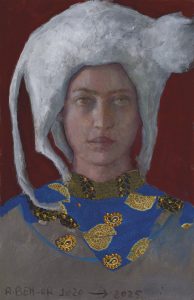
Pulling Hair - Anne Ben-Or
Jan 01, 2026Jan 31, 2026

2025
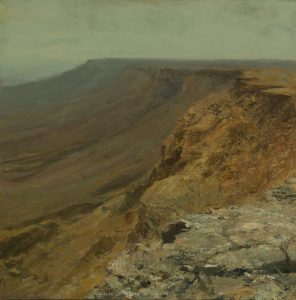
In Place - Uri Blayer
Nov 27, 2025Dec 27, 2025
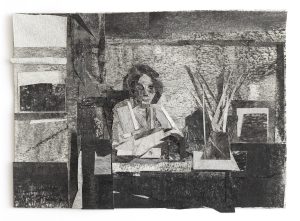
Thin Air Hangs over the Home - Noga Paz & Tigist Yoseph Ron
Oct 23, 2025Nov 22, 2025
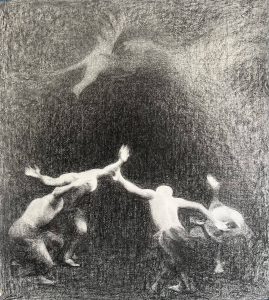
Circling Between Darkness and Light - Noa Shay
Sep 02, 2025Oct 18, 2025
At the violet hour - Boaz Levental
Jul 10, 2025Aug 09, 2025
Inner Echo - Silvia Bar - Am
May 29, 2025Jul 05, 2025
Meir Appelfeld - On the Threshold
Apr 24, 2025May 25, 2025
Alma Gershuni - Sight of the Eyes
Mar 18, 2025
Ran Tenenbaum - Solar Plexus
Feb 11, 2025Mar 15, 2025
Zvi Lachman - Crossing Line
Jan 08, 2025

2024

Asya Lukin - Direct Glance
Dec 05, 2024Jan 04, 2025
Simon Adjiashvili - Forgotten Room
Oct 30, 2024Nov 30, 2024
Matan Ben Cnaan - Hadrian's Helmet
Sep 04, 2024
Dana Ben Nun - FACETS
Jul 30, 2024
Anne Ben Or - Grasping the Edge of Time
Jun 16, 2024
Osnat Ben Dov - Nur
Osnat Ben Dov - Nur
May 15, 2024Jun 15, 2024
David Nipo - Birds Sang
Apr 04, 2024May 11, 2024

2023

Sam Rachamin - Easy on the Eyes
Sep 02, 2023
Yuval Yosifov - Tonal Stories
Jul 01, 2023Aug 01, 2023
Tamar Beit On - Sculptures, Silvia Bar-Am - A City Wreathed in Light
May 29, 2023
Meir Appelfeld - Interiors
Apr 13, 2023May 20, 2023
Simon Adjiashvili - Muted Horizon
Mar 07, 2023
Rotem Amizur - The Flat Islands
Jan 30, 2023

2022

Uri Blayer - Another Dimension
Dec 24, 2022Jan 28, 2023
Beverly Barkat - Galloping
Nov 12, 2022
Yehuda Armoni - Here, Green in its full wholeness is gaping wide
Sep 01, 2022
Boaz Levental - Inside Out
Aug 20, 2022
Anne Ben Or - The Return of the Ornament
Jun 16, 2025Jul 16, 2022
Hadar Gad - Intolerable Beauty
Apr 07, 2022
Eran Webber - Sanguine
Feb 28, 2025Apr 02, 2025
Sam Drukker, Alex Kremer - The Way of the Gaze
May 12, 2022Jun 11, 2022
David Nipo - Over time, a Roman fresco, seems like a poem by Avigdor Hameiri
Jan 22, 2022
Adam Cohn - Between Still and Life
Oct 03, 2022Nov 12, 2022

2021

Anna k., Twenty painters, ten years, one model
Dec 23, 2021Jan 22, 2022
Osnat Ben Dov - Until the Heart Brims with Wisdom
Nov 06, 2021
Meir Applefeld - Arcadia
Oct 02, 2021Nov 06, 2021
Drawings - Group Exhibition
Jul 31, 2021Sep 30, 2021
Simon Adjiashvili - Next to the Shadow
Jun 27, 2021
Adam Cohn - Street Portraits
May 21, 2021
Deborah Sebaoun - smiles from reason
Apr 05, 2021

2020

Rotem Amizur - Rubik's Cube
Dec 15, 2020
Roni Taharlev - Berlin-Jaffa
Dec 03, 2020
Yehuda Armoni - 70% Water
Oct 29, 2020
Anne Ben Or - Reflexion Time
Aug 13, 2020Sep 25, 2020
Sam Rachamin - Catching the Light
Jul 02, 2020Aug 08, 2020
Adam Cohn - In the Wake of Reality
Mar 19, 2020Jun 27, 2020
Debbie Margalit - Ayala and Gertrude in Square
Jan 09, 2020Feb 09, 2020

2019

Michal Sheizaf - Pose
Dec 05, 2019Jan 10, 2020
Yedidya Hershberg - At The Still Point, There The Dance Is
Oct 24, 2019
Simon Adjiashvili - Distant Night
Sep 05, 2019
Noa Shay - Dance of the Happy Shades
Jul 11, 2019Aug 31, 2019
Roni Taharlev - Portraits
May 30, 2019Jul 06, 2019
Rotem Amizur - Rock, Paper, Scissors
Mar 07, 2019Apr 06, 2019
Ran Tenenbaum - Illuminated
Jan 24, 2019Mar 02, 2019
Meir Appelfeld - Paintings
Apr 11, 2019May 25, 2019

2018

Yael Scalia - Palimpsest
Dec 21, 2018
Maia Zer - Listening to Insects
Nov 22, 2018Dec 22, 2018
Anne Ben-Or - State of Mind
Oct 11, 2018
Group Summer Exhibition
Aug 09, 2018Oct 06, 2018
Alex Kremer - SEISMOGRAPH
May 31, 2018
E.M Saniga - Color of Time
Jun 28, 2018
Uri Blayer - Landscapes and Coastlines
May 03, 2018May 26, 2018
Jordan Wolfson - Thicket
Mar 21, 2018Apr 21, 2018
Yehuda Armoni - Lingering Gaze
Feb 15, 2018Mar 15, 2018
Simon Adjiashvili - Symmetry
Jan 04, 2018Feb 10, 2018

2017

Iddo Markus - Gossip
Nov 23, 2017Dec 30, 2017
Leonid Balaklav - Paintings
Oct 19, 2017
Hadar Gad - Red
Hadar Gad - Red
Aug 26, 2017
Maia Zer - Nine Lives
Jul 06, 2017
Yedidia Hershberg - More Image Than a Shade
May 25, 2017Jun 25, 2017
Meir Appelfeld - Paintings
Apr 20, 2017May 20, 2017
Alex Kremer - BADOGOODOG
Mar 16, 2017Apr 16, 2017
Roni Taharlev-The Land Where The Lemon Trees Bloom
Jan 26, 2017Feb 26, 2017

2016

Anne Ben Or - Secret Games
Dec 15, 2016Jan 15, 2017
Simon Adjiashvili - Days
Nov 03, 2016Dec 10, 2016
Uri Blayer - Landscapes and Portraits
Sep 01, 2016Oct 25, 2016
Meir Applefeld - Pastels
Mar 17, 2016
Iddo Markus - Glitch
Mar 17, 2016
genius loci
genius loci
Jan 28, 2016Mar 10, 2016

2015

Alex Kremer - Walking Distance
Dec 10, 2015Jan 23, 2016
Yael Scalia - Delight in All Seasons
Oct 22, 2015Nov 22, 2015
Not in One Day / Group Exhibition
Sep 03, 2015Oct 17, 2015
Jordan Wolfson - New Work
May 28, 2015Jun 27, 2015
Anne Ben Or - Defiance
Meir Appelfeld-Paintings
Apr 30, 2015
Ken Kewley - Bottles, Trees, and Things: New Invented Still Lifes
Mar 09, 2015Apr 18, 2015
Ilya Gefter - The City: Paintings And Ink Washes
Jan 29, 2015Mar 09, 2015

2014

Simon Adjiashvili - One City, One Summer
Dec 11, 2014
Yonatan Pelles - Paintings
Nov 13, 2014Dec 13, 2014
Ludwig Blum&Uri Blayer - Painters in the Desert
Sep 11, 2014
Shalom Flash - Vanishing Scenes
Jun 26, 2014Jul 31, 2014
Meir Applefeld - ''Moon Grove''
May 15, 2014Jun 17, 2014
Tsuki Garbian - Life-likeness
Apr 03, 2014May 03, 2014
Uri Blayer - Under Northern Skies
Feb 13, 2014Mar 22, 2014
Raoul Middleman - ''Figures and Portraits''
Jan 10, 2014Feb 15, 2014

2013

Simon Adjiashvili, Ilya Gefter, Paintings
Dec 12, 2013
JSS' Master Class Exhibition
Nov 18, 2013Dec 01, 2013
Nomi Bruckmann - With This Night With The Dark Cypress With The Pale Light
Jul 11, 2013
Jordan Wolfson - New Work
May 30, 2013Jun 30, 2013
Simon Adjiashvili - Drawings
Apr 08, 2013May 25, 2013
Portraits - Group Exhibition
Feb 28, 2013Apr 06, 2013
Meir Appelfeld - Paintings
Oct 03, 2013Nov 09, 2013

2012

Stuart Shils - What Time Has Not Lost
Dec 29, 2012Feb 23, 2013
Hadar Gad - Four Entered an Orchard
Nov 15, 2012Dec 22, 2012
Masada- Land and Landscape / Uri Blayer
Sep 06, 2012Jul 30, 2012
Ken Kewley - Paintings and collages 2008-2012
Jun 28, 2012Aug 20, 2012
Tirza Freund, ''Suppose a thing''
May 12, 2012Jun 05, 2012
Simon Adjiashvili - Recent Work
Mar 15, 2012May 05, 2012
Meir Appelfeld - Paintings
Jan 12, 2012Mar 03, 2012

2011

Group Drawings Exhibition
Jul 18, 2011Aug 31, 2011
Shalom Flash - Landscapes
Nov 26, 2011Jan 04, 2012
Sangram Majumdar- Selected works 2008-2011
Sep 08, 2011Nov 20, 2011
Jordan Wolfson - Inside and Behind
May 19, 2011Jul 10, 2010
''Close Your Mouth and Say One Word" / Group Exhibition
Mar 31, 2011May 10, 2011
Hadar Gad - Not the same
Feb 26, 2011Mar 26, 2011

2010

Ken Kewley Painting and collages 2000-2010
Dec 30, 2010Feb 20, 2011
Sharon Etgar - Oils and Papers 2009-10
Nov 25, 2010Dec 25, 2010
Meir Appelfeld - Painting
Oct 14, 2010Nov 20, 2010
Gallery Collection
Gallery Collection
Sep 01, 2010
Sigal Tsabari-Reflection from Within
Jul 01, 2010Aug 15, 2012
Simon AdjIiashvili-Recent Works
Apr 22, 2010Jun 25, 2010
Stuart Shils,1986 to present
Mar 04, 2010Mar 17, 2010
Ben Tritt ,Book 4: The Flood
Dec 24, 2009Feb 01, 2010

2009

Yael Scalia Recent work
Nov 05, 2009Dec 05, 2009
Meir Appelfeld Jerusalem-Cabri
Jun 11, 2009Sep 01, 2009
''The Unbelievable Is right here''
Sep 10, 2009Oct 31, 2009
Jordan Wolfson -States of Being
Mar 05, 2009Jun 01, 2009
Michael Ajerman / The good, the bad and the ugly
Jan 10, 2009Feb 25, 2009

2008

Mitch Becker - Counterpart
Nov 20, 2008Jan 01, 2009
Meir Appelfeld- Flowers
Sep 13, 2008Nov 10, 2008
Group Exhibition
Group Exhibition
Jul 03, 2008Sep 05, 2008
Load More